 Oxstones Investment Club™
Whoa! This started as a quick habit. I used to open my wallet and just hope for the best, which was silly. Over time I learned that a blockchain explorer is the difference between guesswork and clarity, especially on Solana where things move fast and fees are tiny but the noise is loud. My instinct said: check the chain first, worry later.
Wow! Solana moves at warp speed. Transactions confirm in milliseconds, but that speed hides subtle things—like memos, token decimals, or a weird contract call that looks harmless but isn’t. At first I thought a successful signature always meant a successful transfer, but then I realized failed inner instructions and partial token moves can tell a different story. Actually, wait—let me rephrase that: a confirmed signature is only the beginning of what you should inspect. On one hand you get speed; on the other, you get complexity.
Seriously? Yes. A good explorer shows token mints, holders, and transfer histories in a way your wallet often can’t. I like to trace a token’s supply movements when a new project pops up, because hype can mask manipulation. The first time I dug into a token trace I found a rug-flag pattern—large concentrated holdings moved right before a big sell. That discovery changed how I evaluate early tokens.
Hmm… sometimes the UI surprises me. Some explorers show program logs inline, which is very very helpful. Other times you have to stitch together transactions manually, which is annoying but doable. (oh, and by the way… reading those logs is like learning another dialect of Solana.) If you know the program IDs, you get the story; otherwise, it’s just noise.
Whoa! Token trackers are underrated tools. They let you filter by mint address and see minting events, burns, and metadata updates. Medium complexity projects will update metadata without explanation, and that can affect value or functionality—so watching that feed matters. Initially I thought metadata changes were rare, but actually they’re quite common for evolving projects.
Wow! SOL transactions need a slightly different lens than tokens. A native SOL transfer is straightforward, but wrapped SOL (wSOL) flows through SPL token channels and can show up in smart contract interactions. If you’re watching fees or staking behavior, the explorer’s fee breakdown and inner instruction list are gold. I’m biased, but that fee-per-instruction view saved me from several confusing balance shifts.
Seriously? Yup. Not all explorers are equal. Some focus on UX, some on raw data, and some on developer tooling. Personally, I jump between views—transaction details for the casual check, and program logs and parsed instructions when debugging. That toggle between quick glance and deep dive is what separates a casual user from someone who can actually reason about on-chain events.
Whoa! Want a practical habit? Start by copying the mint or address you care about and paste it into the search bar. Then scan the latest transfers for large movements and check the top holders breakdown. If you see concentration in a few wallets, consider that a red flag—concentration can mean vulnerability to coordinated sells. I’m not 100% certain every concentrated holding is malicious, but my gut says treat it cautiously.
Wow! For deeper investigations, use filters. Filter by program, by slot range, or by token change type. Some explorers provide CSV exports so you can run your own analysis, which I do when I’m vetting airdrops or suspicious mints. That spreadsheet habit—yes, boring—has protected me from a few messy trades.
Whoa! There’s a tool I keep recommending when people ask for a reliable explorer. The interface balances clarity with power and it helped me trace a tricky token flow last month. Check the recommendation below for a hands-on look. If you like to click through transactions instead of guessing, that resource is handy.
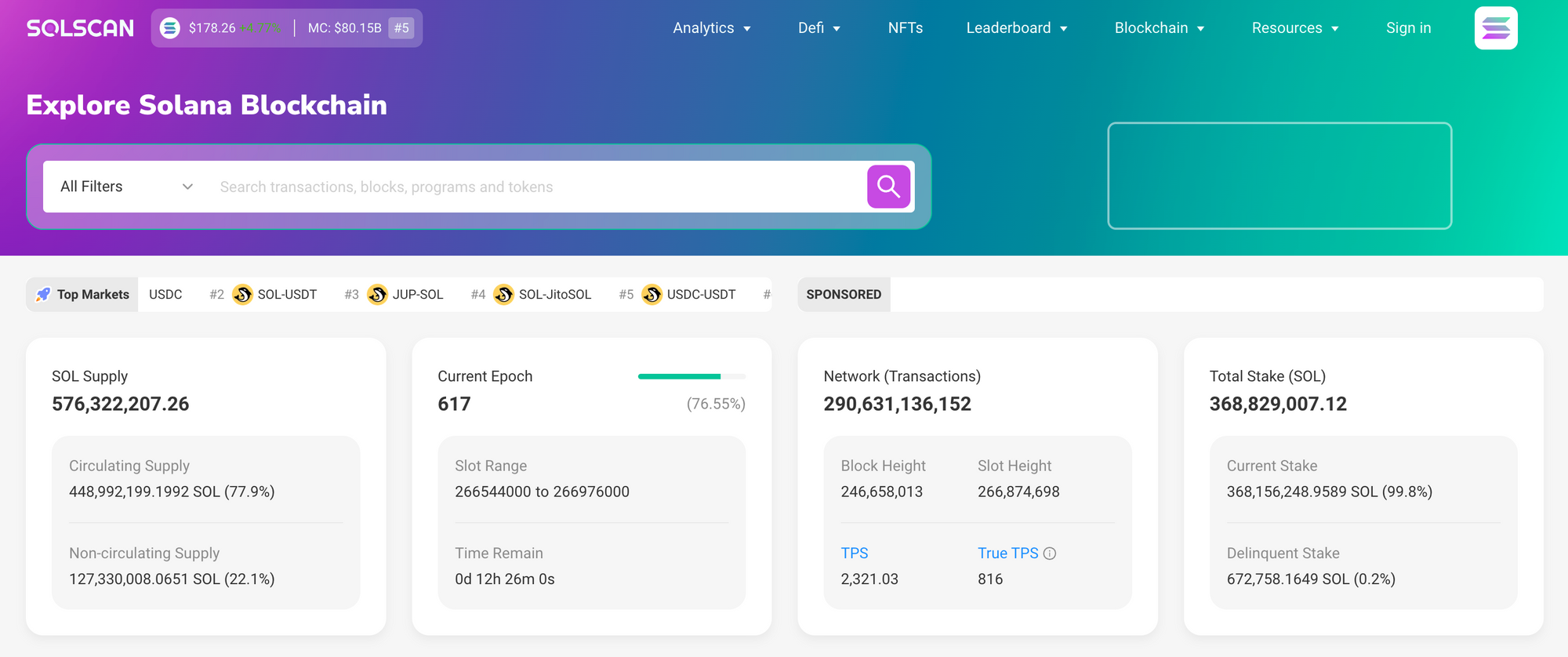
A practical walkthrough using a popular explorer
Okay, so check this out—open the explorer and paste the wallet or mint you want to inspect. The overview will show balances, the token list, and recent transactions, and you can expand a transaction to see parsed instructions and inner logs. If you want to go straight to the source, visit the solscan explorer official site for a familiar layout that mixes both user-friendly and developer-grade views. I’m biased toward explorers that expose program logs and allow quick toggles between lamports and SOL decimals, because decimals are the kind of tiny thing that can trip up a trade.
Whoa! When tracking token flows, watch for these signs: sudden mint events, repeated transfers between a small cluster of addresses, and simultaneous whale sells across liquidity pools. Medium-level checks include comparing token decimals and metadata URIs, which sometimes point to swapped or duplicate mints. For full transparency, cross-reference contract IDs and program logs—this often reveals automated market maker interactions or contract-driven burns.
Wow! Sol transactions can be deceptive in bundle form. A single signature can trigger multiple inner instructions and interact with several SPL tokens. Without parsing those inner instructions you might miss a swap, a liquidity move, or a fee extraction. Initially I thought bundled transactions were just efficiency; now I treat them as potential obfuscation, though often they’re simply optimized operations.
Hmm… if you’re building or auditing, use the explorer’s RPC traces and log outputs to see what each instruction executed. That tells you whether a token transfer was direct, routed through a program, or part of a swap. On one hand this feels technical; on the other, it’s the most reliable way to separate normal activity from sneaky behavior.
Whoa! A few quick tips I wish I’d known earlier: copy mint addresses not token names, double-check decimals, and watch the “Top Holders” tab. Don’t trust screenshots—always confirm on-chain. Somethin’ as simple as an incorrect mint address can ruin a trade, and trust me, I’ve clicked the wrong one before.
Wow! About privacy and security—browsing the chain is public, so your tracing leaves no fingerprint on the network, but your on-chain activity still exposes patterns. If you move large sums, consider splitting transactions or timing them differently to avoid predictable patterns. (I’m not giving legal or financial advice—just practical habits.)
Seriously? Keep an eye on a few other things: slot confirmations for timing, block time for sequence, and fee payer data. Those fields help reconstruct the timeline when multiple parties interact. When you want to contest or analyze a transaction, having that timeline is priceless.
Whoa! Explorers also help with developer workflows. If you’re deploying a program or minting tokens, inspecting post-deploy transactions helps verify state changes and authority updates. Medium-level debugging often involves reproducing calls in a local testnet then comparing logs to mainnet behavior. It’s a small step that prevents big mistakes later.
Wow! One more practical nudge: make bookmarks for frequently used mints and addresses. The efficiency gains feel mundane, but they save time in real situations. If a project updates metadata or pushes a token migration, you’ll notice faster and can act accordingly. This habit turned me from reactive to proactive, slowly but steadily.
Common questions about Solana explorers and token tracking
How do I verify a token is the right one?
Check the mint address, inspect the token’s metadata URI, and review top holders and recent mint events. If the project has official channels, cross-reference the mint address there. Also scan recent transactions for unexpected mints or mass transfers; those are red flags.
Can I trust explorer-parsed instruction labels?
Mostly yes, but parsed labels are heuristics. For critical actions, read the raw instruction data and program logs. Oh, and don’t rely on a single source—compare two explorers if something seems off. That extra step has saved me from trusting misleading labels.